
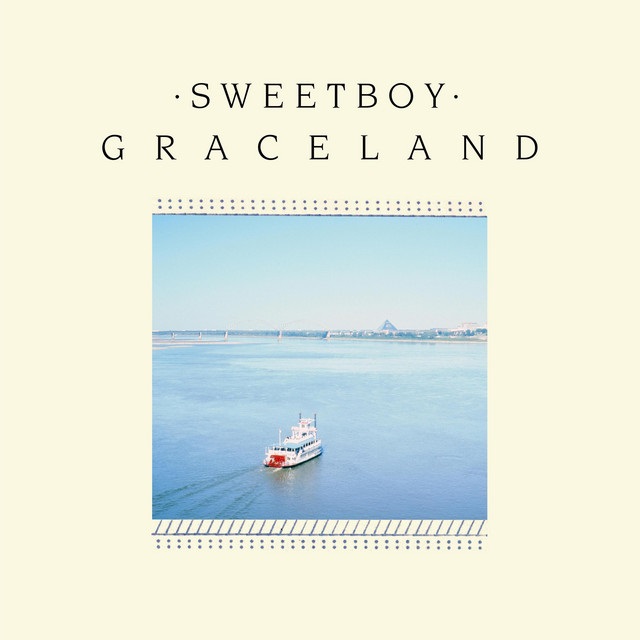
When I first heard Paul Simon’s Graceland, it was in my father’s car. I don’t remember the date of course, just that I was young. If I had to guess, I was probably 11 or 12. Just on the cusp of being a teenager, but still going to my father’s house on the weekends.
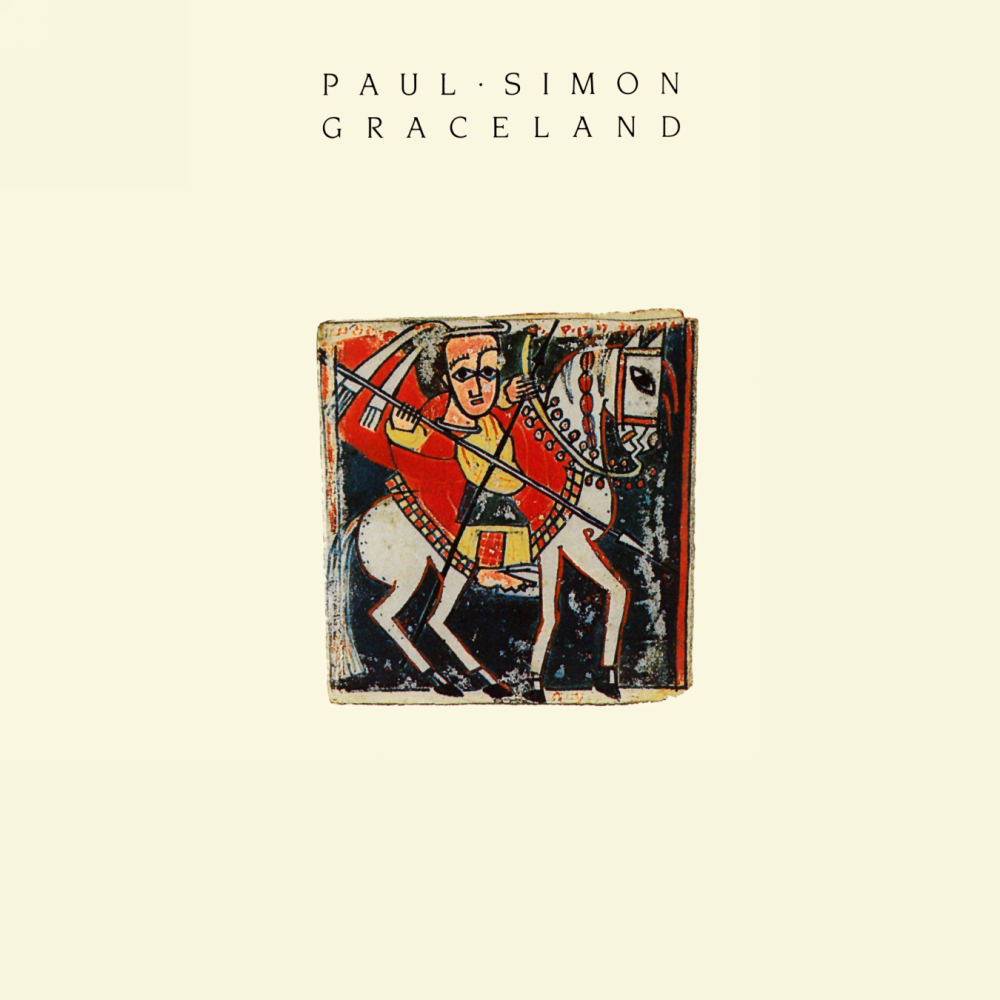
The album became one of those things that my brother, my father, and I all enjoyed. It’s not a huge list, mostly consisting of things my father enjoyed that my brother and I took on: the Yankees, Cribbage, fajitas, Neil Diamond, and a few others.
At the time, my father was working for the United Methodist Church’s General Board of Global Ministries. What that meant was that he worked with missionaries around the world, including South Africa. As a result, Apartheid and the forces aligned against it were regular parts of our lives. We attended several protests, met missionaries from South Africa, and even happened to be in a Black church in Harlem the morning Nelson Mandela was freed.
Those activities and memories are an enormous part of the development of my political consciousness, and Graceland is indelibly tied to them. Over the years, I have developed a better understanding of the controversy surrounding the album and respect the opinions of the folks who, to this day, hold Paul Simon in contempt, but I also understand Simon’s point that it was about unity and that music should rise above. I don’t know who is right, but for me the album will always be about raising up voices and joining together.
The song Graceland always fascinated me as a kid because I never quite connected with its tale of middle-age melancholy and lament. The connection to Elvis always confused me as well when I was younger. I recall a conversation between my brother, father, and I, also in the car on our way somewhere, where we wondered if Simon meant some other Graceland rather than the home of Elvis.

Years later, as I am firmly in my middle years, the song makes more sense to me. I can better relate to its ideas of “falling, flying, and tumbling in turmoil.” I also understand the importance of Elvis as a touchstone for people of Simon’s generation in a way I didn’t before. For me, Elvis is a musician and a star. For Boomers, he was royalty. ‘The King’ moniker is in no way ironic. Heck, just the other week, I found myself in the giftshop of a famous buffet restaurant in Lancaster, Pennsylvania. The Giftshop was the size of a department store, and even now, in 2024, there was an entire corner devoted to Elvis.
In other words, it makes a certain amount of sense that even someone of Paul Simon’s fame and stature would find himself yearning to go looking for ‘The King’ when he found himself adrift.
This is all a long way to say that this album and this song mean a lot to me. It would certainly be a ‘desert island’ disc, and if I could only listen to one album for the rest of my life, it would be in heavy consideration with the likes of London Calling, Rock Art and the X-Ray Style, Don’t Know How to Party, and a very few others. It is a touchstone of my relationship with my father and brother, my political awakening and sense of justice, and of how music can reflect my life back at me in ways that help me understand it in a way that I can’t simply by living it.
So, imagine my surprise when I heard a 20-second snippet of a cover of Graceland that fundamentally redefined the experience of hearing those lyrics that are as familiar as a sunrise to me.
There is an element of serendipity to it. I almost never have the sound up on my phone, especially not when I’m browsing Instagram, with its embedded cacophony always ready to drown out any thought you might have tried to process. Despite that, on that day, I did, and a musician I follow from Northern Ireland, Sylvy, had a snippet in her story, and it caught my ear in the way a fish hook grabs a fish.
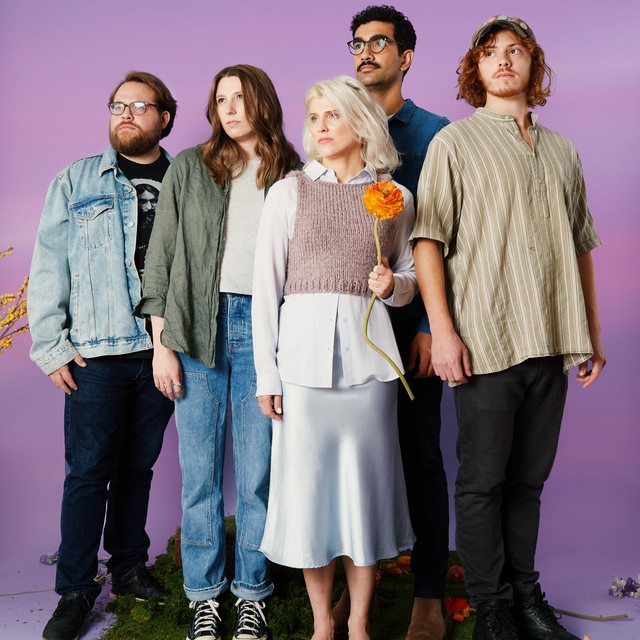
I immediately sought out the full version, which you can listen to here. I would suggest going and listening right now. It turns out the cover version is by a band out of New York City (much like Paul Simon himself) called Sweetboy. Sweetboy is a newish band with only one full album, which I also recommend, to their credit. The band was started by Anna Barnett and Jon Flores, and to the best of my knowledge, consists of Darby Brandon on drums, Jeremy Cornell on bass, and Connor O’Sullivan on guitar. I say to the best of my knowledge because the lineup looks a little different here and there in videos, and none of their social media or website specifically has band credits. I pulled the names from a concert write-up from October, so if the lineup has shifted, I apologize in advance. They also don’t have any physical media that I could track down and view the credits before writing this up. So, as I said, best guess.
Anyway, they’re great.
Their album “A Day in the Park” came out in 2023 and is terrific, in particular the songs “Island” and “Upstate,” but it’s a seven song album, and I promise you have time to listen to the whole thing. They also have a new song called ‘Heart, Beat,’ which is about Barnett’s father nearly dying. It’s a powerful, poignant song that, as someone who has been trying to navigate my mother’s health and aging and house fire issues, hit me in a place I’m probably not ready to write about just yet. It’s great, though, and you should listen to that too.
Back to Graceland.
I don’t remember exactly which snippet I first heard on Instagram. But I can tell you I had an emotional moment the first time I listened to the song in full. Instead of the jaunty opening to Simon’s original, with all its evocation of a car bouncing along southern highways, the Sweetboy version opens with a lone repeated piano note.
It’s stark and engaging and presumably played by Jon Flores. In the original Paul Simon doesn’t start singing until about 40 seconds in. In the Sweetboy version, Barnett starts singing after a mere five seconds.
It’s a small change, but it has a big result. In the original, you feel like you’ve been riding a long bit before hearing what, to my mind, is one of the truly great opening lyrics in all of musicdom, “The Mississippi Delta was shining like a National Guitar.” That line alone makes me want to get in the car and head down South. Here, it’s different. It’s quieter; coupled with the piano, there’s a starkness that feels hymn-like.
After about 25 seconds, we hear the first drum beats. Taps really. More music slowly gets added, very subtly, the piano expands, but it’s all riding along with that single repeated note and Barnett’s singing those oh-so-familiar words.
The effect is that rather than finding yourself dropped into a road trip in progress, you are at the start of something. You are setting forth. This alone is a seismic shift in the bones of the song. The whole essence of the original is finding yourself lost halfway through and trying to find a new destination. It’s about his divorce and looking for equilibrium, casting about and landing on a cultural rock and wondering if that’s where salvation might lay. It is fundamentally a different story here. Instead of searching for equilibrium, it becomes something else, something new.
The song builds slowly, adding new elements at a leisurely but consistent pace. The drums, in particular, stand out as they go from what sounds like tapping on the rim to adding in cymbals, fills, and growing in volume and complexity. Everything is building here. The volume and intensity of Barnet’s lyrics build and build until they EXPLODE into a huge ‘I’m going to Graceland.’
There is incredible release and emotion as Barnett puts everything into it. The most important thing is how much emphasis she puts on the Grace part of Graceland. This doesn’t feel like a song about a previous generation’s icons but about the idea of grace itself. The whole thing is turned on its head. It becomes a song that knows the destination ahead of time, and instead of being defined by outward things, it’s about finding grace within.
The poor boys, pilgrims, and human trampolines become a different kind of fellow travelers. Instead of being a cast of misfits on Simon’s journey, they become pilgrims looking for spiritual release.
The closest comparison I can think of is Springsteen’s ‘Land of Hope and Dreams’ with its evocation of the traditional folk gospel song ‘This Train’ at the end. They have a similar feeling to that of a preacher in church ringing out the gospel.
The net result is it takes a brilliant song and turns it into something wholly different but no less memorable and beautiful. It’s rare that a cover of something so well known, at least to me, can transform it utterly and not end up with something that feels lesser. Wonderful as it is, Justin Townes Earle’s version doesn’t transform the song into something completely new. It strips it down into Earle’s style, and he makes it his own, but it is still the same song at heart. Sweetboy does something so different with it that it simply feels like a new song. It reinterprets a journey of a lost heart as a hymn to the fundamental power of humanity in the face of a world increasingly hostile to it, salvation instead of direction.
Paul Simon was trying to figure out how to move forward, Sweetboy is showing us how to soar.
 SHOUTING STREET
Leave a comment